
Slope Stability Testing
Slope stability assessment for subdivisions, roads, dams and hillside structures — identifying risk before it becomes a design or construction problem.
Understanding risk on sloping sites
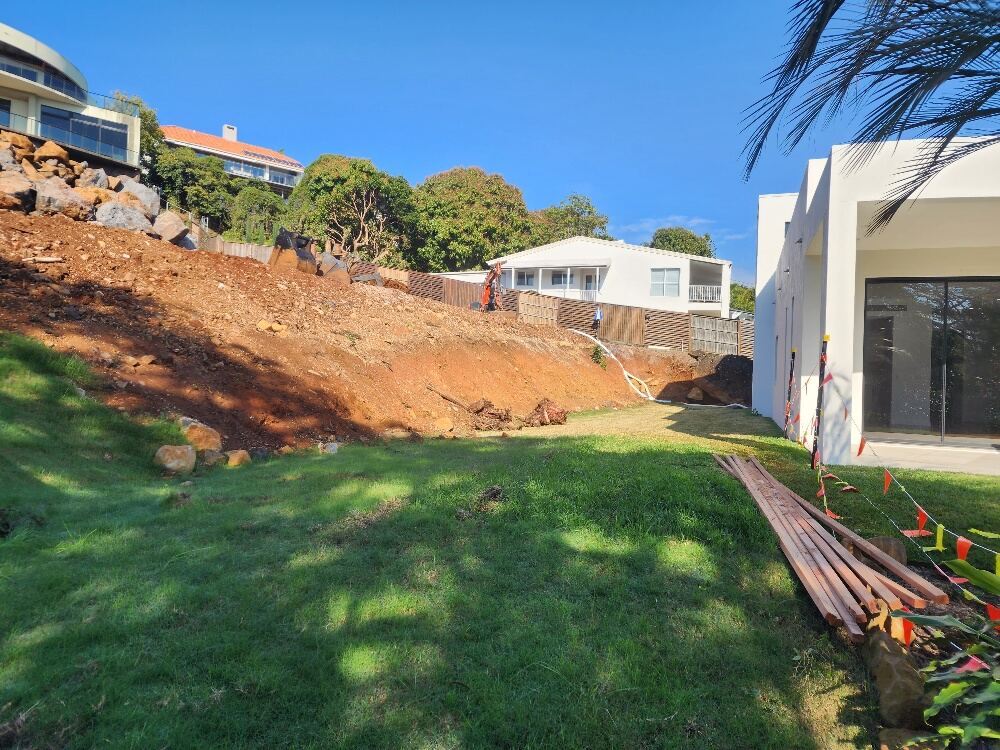
Sites on or near a slope carry a risk that flat sites don’t: the possibility of ground movement, slippage or failure, particularly after heavy rain, excavation, or the addition of load from a new structure. Slope stability testing investigates the strength and composition of the soil and rock on and around a slope to assess whether it’s stable enough for the proposed development, or what remediation might be needed.
Our assessment typically combines site inspection, bore holes or test pits to determine soil strata and groundwater conditions, and laboratory testing of shear strength parameters. This data feeds into a stability analysis that identifies the factor of safety for the slope under existing and proposed conditions — informing decisions on building setbacks, retaining wall design, drainage, or whether cut and fill earthworks are viable.
This service is especially relevant for hillside subdivisions, rural roads, dam embankments and any structure proposed near an escarpment, cutting or steep batter.
What's included
- ✓ Site inspection and slope hazard identification
- ✓ Bore holes or test pits to determine strata and groundwater conditions
- ✓ Laboratory shear strength testing
- ✓ Stability analysis and factor-of-safety assessment
- ✓ Recommendations for setbacks, retaining structures or remediation
Who this service is for
Developers and engineers planning hillside subdivisions, councils and contractors managing roads or embankments, and landholders needing to understand slope risk before building near a slope or escarpment.
Related questions
When should I get a slope stability assessment?
Before subdividing or building on a sloping site, after any sign of ground movement or cracking, or when council requires it as a condition of development approval.
What increases slope instability risk?
Heavy or prolonged rainfall, removal of vegetation, poorly managed site drainage, excavation at the toe of a slope, and added load from new structures near the top of a slope.
Building on or near a slope?
Get a defensible slope stability assessment before your design and approvals proceed.