
Site Classification
AS 2870 residential site classification for new homes, extensions and renovations — the report your building certifier and structural engineer need before footing design.
Why site classification matters
Before a footing or slab can be designed for a new house, extension, shed or granny flat, the site itself needs to be classified in accordance with AS 2870 — the Australian Standard for residential slabs and footings. This classification tells your builder and structural engineer how reactive the underlying soil is, and therefore how much ground movement the footing system needs to be designed to withstand.
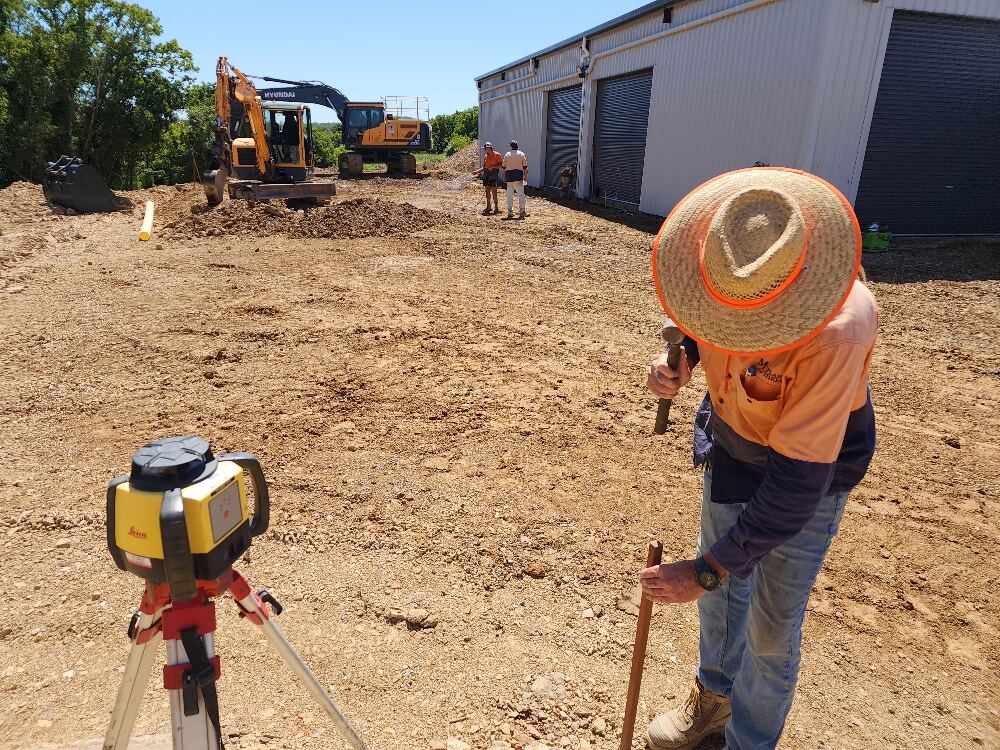
Soiltester assesses the site through a combination of hand auger or borehole investigation, soil sampling, and — where required — laboratory testing for soil reactivity (linear shrinkage / swell). We also review site conditions such as existing fill, slope, drainage, nearby trees and any signs of previous movement, all of which can affect the final classification.
The result is a classification (from A through to P, including the reactive classes M, H1, H2 and E) that your building designer uses to select an appropriate footing system — helping avoid costly over-engineering or, worse, an under-designed footing that cracks down the track.
Full Testing Methodology
Testing runs in two stages. In the field, we insert a small probe and heater to the depth of the proposed cable or pipe route, pass a controlled pulse of electricity through the heater to warm the surrounding soil, and take precise temperature readings with the probe — pulsing heat quickly minimises the effect of moisture movement on the result.
In the laboratory, a core (or rock) sample from the site is dried out completely to remove existing moisture, then re-tested under a series of controlled moisture levels. This lets us report how the soil’s thermal resistivity changes from fully dry through to typical field-moisture conditions, so cable design can be based on realistic worst-case and in-service values rather than a single data point.
Material Specification
Where a thermal backfill is required, we test and certify it against a specification along these lines (adjusted to project requirements):
- ✓ Maximum thermal resistivity of 1.2 K·m/W at full dry-out (0% moisture)
- ✓ Stable, consistent resistivity curve down to 0.5% moisture
- ✓ Non-shrink, non-cracking after placement and curing, for the life of the cable
- ✓ Screened to less than 4.75mm for direct-buried cable, to prevent sheath damage
- ✓ Compacted to 98% maximum dry density in layers matching test conditions
- ✓ Tested by a NATA-registered laboratory to ASTM D5334-08 and IEEE 442
- ✓ If flowable: average slump of 110mm (range 90–130mm), vibrated to eliminate air voids
Test Frequency & Sampling Standards
Sample and compaction test locations are selected randomly in line with AS1289, AS1141.3.1, and — regardless of project location — Queensland TMR test methods Q050 and Q060. Test frequency is generally set on a tonnage basis for the volume of material placed, with a NATA test certificate issued for every sample. The Principal retains the right to request repeat testing at any stage of the works.
What's included
- ✓ Site inspection and borehole or hand auger investigation
- ✓ Soil sampling across the building footprint
- ✓ Laboratory reactivity testing (linear shrinkage / Atterberg limits) where required
- ✓ AS 2870 site classification report for your certifier or building designer
- ✓ Fast turnaround to keep your build program on track
Typical AS 2870 classifications
| Class | Description |
|---|---|
| A / S | Stable, sand and rock sites with little or no ground movement |
| M | Moderately reactive clay or silt sites |
| H1 / H2 | Highly reactive clay sites, moderate to high ground movement |
| E | Extremely reactive sites, very high movement |
| P | Problem sites — fill, mine subsidence, soft soil, landslip or abnormal moisture |
Who this service is for
Owner-builders, builders, building designers and certifiers who need an AS 2870 classification before lodging a development or building application for a new dwelling, extension or outbuilding.
Related questions
Do I need a site classification for a small extension?
Most councils and certifiers require a current site classification for any new footing or slab, including extensions, decks with footings, and granny flats — check with your certifier before starting design.
How long does a site classification take?
Field work is typically completed in a single site visit, with the report issued once any laboratory testing is complete — turnaround depends on whether reactivity testing is required.
Ready to lodge your building application?
Get your AS 2870 site classification sorted quickly so your footing design can go ahead.